



Agentic BI and the semantic layer
Traditionally, reporting environments often leave data definitions, security rules, and business logic scattered across databases, dashboards, and individual applications. Different teams may define the same key performance indicator (KPI) differently, hard-code calculations in individual reports, or manage access rules separately across applications. This can create reporting silos that make it difficult to maintain consistency as reporting scales.

In recent years, there’s been a major shift in how companies approach reporting environments. Organizations are embedding analytics into their applications and leaning on AI to help users make quicker decisions. They're also adopting a Business Intelligence (BI) semantic layer. This intermediary sits between databases and reporting software, providing an independent data view by defining common business vocabulary, relationships, and rules among data elements.
By bridging the gap between the technical structure of underlying data sources and the way users understand and work with information, a semantic layer provides an important foundation for modern business intelligence reporting and analytics. This becomes particularly important as organizations explore agentic BI—AI-powered systems that can interpret business questions, analyze data, and potentially take action based on insights. However, not all agentic BI is equal. Without a semantic layer, an AI agent has to decipher technical field names, infer relationships, and guess at calculations. This leads to inaccurate results, inefficient queries, and inconsistent metrics. For these systems to produce reliable results, however, they need more than access to raw data. They also need standardized definitions, governed business logic, and appropriate security controls.
What is agentic BI and why does it depend on a semantic layer?
AI is widely seen as an accelerator for the insights traditional BI has always delivered, but it shows up in several distinct forms. The labels are often used interchangeably, which makes it hard to tell what a given tool actually does. Four approaches come up most often:
- BI copilots: An AI assistant built into a BI tool that helps users find, open, and summarize reports and dashboards that already exist. Copilots make existing content easier to discover, but they are limited to what someone has already built.
- Text-to-SQL tools: These translate a plain-language question into a database query, usually by reading the schema of the underlying data. They open up ad hoc questions beyond pre-built reports, but when they query raw tables, the accuracy of the answer depends on how well the model guesses what the table and column names mean.
- Conversational analytics: A chat interface layered on top of traditional BI, allowing users to ask for ad hoc reports or get answers to questions in plain language. The user still drives the exchange, one question at a time.
- Agentic BI: Business intelligence powered by autonomous AI agents that can interpret a question, plan the analytical steps needed to answer it, perform the analysis, and deliver the result with minimal human input. Depending on how it's configured, an agent can also take action on what it finds.
The further a tool moves down this list, the more it is asked to do on its own, and the more it needs to know about what the data means. A copilot pointing to an approved dashboard borrows the trust of whoever built that dashboard. An agent building the analysis itself has no such safety net. It has to know what "Gross Margin" means, which tables to join, and who is allowed to see the result.
How a semantic layer creates trusted data for AI and embedded analytics
That is the job of the semantic layer. It serves as a kind of "dictionary" between databases and user applications, ensuring the "brain" (agentic AI) portrays data accurately. It does this by standardizing business vocabulary, defining relationships among data elements, and applying governed business logic, which also lets people query data without deep technical expertise.
For example, when a user asks an agent to analyze "Gross Margin," the semantic layer connects that business term to the appropriate data sources, calculations, relationships, and access rules. Instead of working out what the metric means from scratch, the agent works from a standardized definition the organization has already established and approved.
This matters well beyond AI. In many organizations, the same metric can mean different things across reports, departments, and applications, so analyses built on the same underlying data can still produce conflicting results. A BI semantic layer addresses this problem by standardizing business logic across the organization. It can:
- Standardize definitions, dimensions, and key performance indicators (KPIs): Metrics such as revenue, profit margin, and growth rate are defined and calculated consistently across reports and applications.
- Act as a single source of truth: Centralized business definitions and logic reduce duplication. They also help ensure that different reporting experiences rely on the same underlying rules.
- Enforce rules at query time: Governed logic and security controls can be applied when data is requested. That way, users and applications get consistent and appropriately authorized results.
This consistency benefits both humans and AI agents. It allows human users to interact with embedded analytics without reconciling conflicting metrics, and AI agents to work from standardized business definitions rather than interpreting data independently.
Key architectural components of an AI-ready semantic layer
An AI-ready semantic layer has several architectural components that work together to make enterprise data more consistent, accessible, and secure:
- Reusable semantic models: These models define common metrics, dimensions, relationships, and business logic that can be reused across reports and applications, and don't have to be recreated for each use case.
- Metadata: Metadata provides context about data elements, helping users and AI systems understand what information represents and how different data sources relate to one another.
- Security: Role-based permissions and other access controls help ensure that users and AI-driven applications can only access authorized data.
- Traceability: Teams can review what was executed, when, by whom, and which definitions were applied. Full tracking of query logic, semantic objects, joins, and filters supports validation and compliance.
Together, these components provide a foundation that can scale across enterprise reporting and embedded analytics.
Practical strategies for implementing agentic BI
Organizations seeking to implement agentic BI should establish governance before introducing AI-driven analytics. First, identify critical business metrics and create standardized definitions for KPIs, dimensions, and calculations. Maintain these definitions centrally and review them regularly as business requirements change.
Then, establish clear ownership over semantic models and business logic, and integrate security controls into the architecture from the start. These actions help ensure that AI agents and embedded applications always draw from consistent definitions and only access authorized data.
Once this governed foundation is in place, organizations need a reliable way to turn trusted data into usable reporting experiences.
This is where a reporting platform like Jaspersoft comes into play. With its embedded reporting capabilities, Jaspersoft empowers organizations to deliver pixel-perfect reports directly within their applications, so customers can access consistent, actionable information without requiring development teams to build reporting functionality from scratch. Its built-in semantic layer also lets teams define business terms, set security rules, and handle data federation at the reporting layer, instead of building separate governance infrastructure first.
Why trusted AI starts with a trusted semantic layer
Although agentic BI can transform how organizations interact with data, reliable AI-driven insights require a powerful BI semantic governance layer. This layer gives AI agents consistent business definitions, standardized KPIs, and appropriate security controls, which are needed to derive reliable insights and work efficiently. Ultimately, this helps organizations maintain consistency across enterprise and embedded reporting environments.
If you're interested in seeing how embedded analytics works with a trusted semantic layer, Jaspersoft is built for that. It's designed to work with Actian's AI Analyst, a conversational analytics tool built on a governed semantic layer, so organizations can move from governed data to agentic BI to end-user reporting within one connected stack. Using report embedding techniques, organizations can bring these insights directly into the applications and workflows where users need them.
Learn more about how Jaspersoft's reporting software can support your reporting needs.
Ready to give it a spin?
Start your 30-day trial now.

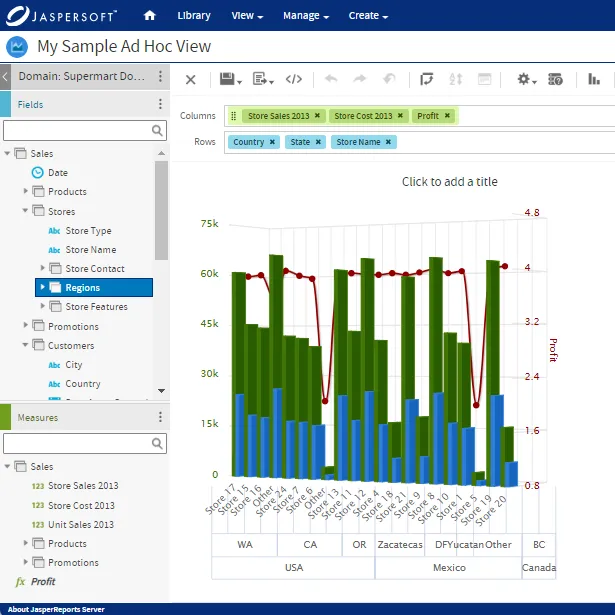
Try Jaspersoft - Free Trial
Efficiently design, embed, and distribute reports and dashboards at scale with Jaspersoft.
Build versus Buy: An In-depth Guide
This whitepaper provides a framework for the decision-making process and critical trade-offs between building or buying an embedded BI and reporting tool.
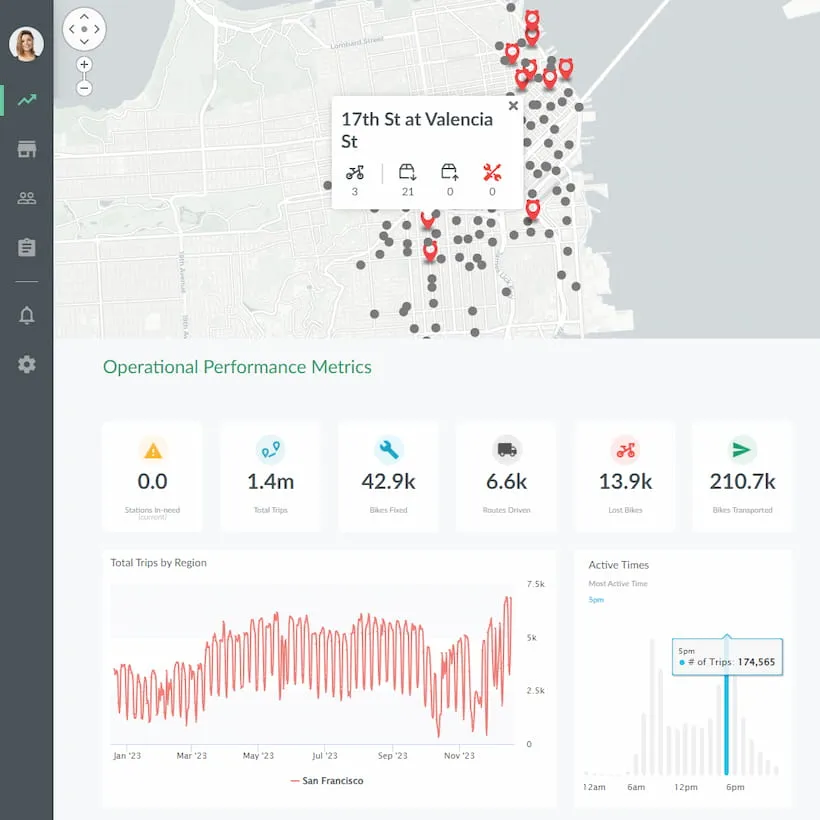
Interactive demo: Bikeshare Embedded BI, supported by Jaspersoft
Experience how to turn data into valuable insights that you and your customers can use to make better decisions.
