



Jaspersoft + Actian DataConnect vs. Qlik
Most software companies don't think about analytics when they build their products. The focus is on the core workflow, the thing customers are actually paying for.
At some point, though, a customer or employee asks to see the data inside your app. That's when you start Googling "what is embedded analytics," which lets you build items like reports and dashboards directly into applications, websites, or portals, so users can access insights without leaving their workflow.

Embedded analytics choices include Power BI Embedded, which is often the default answer for Azure teams. Qlik is also popular due to its associative engine, which lets users explore data relationships on their own. Finally, there's Jaspersoft, which many teams choose for reports that look like a permanent part of the product. Read on to see how Jaspersoft compares to embedded analytics alternatives like Power BI Embedded and Qlik as an architecture-agnostic option for developers.
Evaluating architectural flexibility and embedded alternatives
Customers who are looking for embedded analytics solutions may start by looking in their own stack, with solutions like PowerBI. While this may seem convenient, the commitment required to only work within Azure limits upside and can become a constraint for customers running on AWS, Google Cloud, or an on-premise system the vendor doesn't control. For an independent software vendor (ISV) selling into industries such as healthcare, finance, or government, that constraint can rule out entire segments of the market before a sales conversation even begins.
Jaspersoft was designed with flexibility in mind, allowing deployment on any infrastructure a development team prefers—cloud, on-premises, or hybrid—without having to rearchitect the application around the reporting layer. This matters most for vendors who don't control their customers' infrastructure, like a healthcare SaaS platform supporting a hospital's existing data center alongside newer cloud deployments in the same rollout.
Actian DataConnect, which integrates with Jaspersoft, extends that flexibility to the data layer itself. It's a hybrid data integration engine and embedded integration platform as a service (iPaaS) that allows developers to extract, transform, and load (ETL) data across data systems that were never designed to talk to each other. Rather than requiring all source data to live in one place before reporting can happen, DataConnect connects to systems already in use, on-premises databases, cloud warehouses, and third-party applications, and moves data between them under a consistent set of governance rules.
Qlik isn't locked to Azure either, but its flexibility works differently. The QIX Associative Engine loads each dataset into RAM to power its interactive exploration, and for a multi-tenant SaaS product, that typically means a separate dataset per customer. As the customer count grows into the hundreds or thousands, that memory footprint, and the infrastructure cost behind it, grows with it. Jaspersoft and DataConnect avoid that trade-off by keeping data in its existing systems and integrating it at the reporting layer instead of loading it all into memory first.
Operational precision vs. visual discovery: Pixel-perfect reporting standards
For certain operational documents, such as medical lab results, banking invoices, regulatory filings, and shipping manifests, pixel-perfect precision is critical. Even a slightly cut-off table column or a misaligned text box can make a document unusable or noncompliant, leading to a manual reissue that wastes time and energy.
Jaspersoft is built for these layout-persistent, band-based documents, using absolute X and Y positioning to keep every element exactly in place, so each version looks identical, run after run, customer after customer.
Qlik takes the opposite approach. Its dashboards use a responsive canvas built for exploration, where charts resize and reflow based on screen size and user selection instead of holding a fixed position. That's a real strength for ad hoc analysis, but it's the wrong tool for a document that has to look the same every time it's generated.
Data integration and governance with Actian DataConnect
A low-code, intelligent data integration platform that ensures data is collected and stored correctly, Actian DataConnect is essential for governed data pipelines. It continuously profiles, cleans, and monitors data upstream across complex hybrid environments, ensuring data integrity and compliance before information reaches Jaspersoft's reporting layer or downstream AI models.
Unlike upstream pipeline governance, Qlik’s associative engine is designed with developers in mind, especially those handling complex, hybrid data sources. It loads and compresses all data relationships without loss or rigid linear joins, then boosts fast, interactive discovery by dynamically highlighting both associated and excluded data, helping users uncover hidden trends during analysis.
Embedding capabilities and API-first extensibility for OEMs
Original equipment manufacturers (OEMs) are often torn between building in-house or buying a commercial embedded analytics platform. While building in-house provides maximum initial design freedom over the user interface (UI) and user experience (UX), it incurs high ongoing maintenance, delayed time-to-market, and high engineering costs for complicated features like reporting engines. On the other hand, buying commercial lowers cost and accelerates delivery but could create a fractured UX if the vendor's UI can't be fully hidden or branded.
The sweet spot is provided by Jaspersoft. It provides true white-labeling by providing API-first components, so the vendor's interface vanishes completely behind your application's design system.
Scalability and total cost of ownership for enterprise analytics
When choosing enterprise reporting and embedded analytics solutions such as Power BI Embedded, Jaspersoft, and Qlik, you must select the right licensing structure. The wrong model can drain product growth, leading to huge bills as user bases scale.
There are four main types of licensing structures:
- User-based licensing ties software access directly to individual authenticated users. This model breaks down for customer-facing applications, since it would be very expensive.
- Core-based or infrastructure capacity licensing calculates fees using the size of the server deployment, such as server capacity units, regardless of how many people access the system.
- Usage/consumption-based licensing charges companies according to utilization metrics, such as the volume of API calls, the number of database rows scanned, and PDF/Excel reports.
- Open-source (OSS) core with commercial distribution is what Jaspersoft offers. It splits free, community-driven tool sets from premium, enterprise-grade editions. The community edition is licensed under the open-source license LGPL, and developers can integrate the core rendering libraries into commercial programs for free without triggering restrictive copyleft obligations. On the other hand, the commercial subscription upgrades the platform with legal indemnification, dedicated enterprise support, advanced architectural layers like interactive ad hoc web dashboards, and security updates.
Interested in seeing how Jaspersoft works for you? Try it today with a 30-day free commercial trial.
Ready to give it a spin?
Start your 30-day trial now.

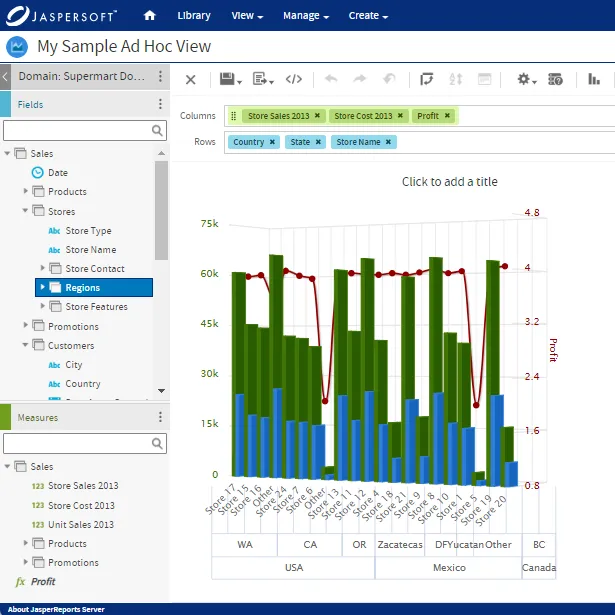
Try Jaspersoft - Free Trial
Efficiently design, embed, and distribute reports and dashboards at scale with Jaspersoft.
Build versus Buy: An In-depth Guide
This whitepaper provides a framework for the decision-making process and critical trade-offs between building or buying an embedded BI and reporting tool.
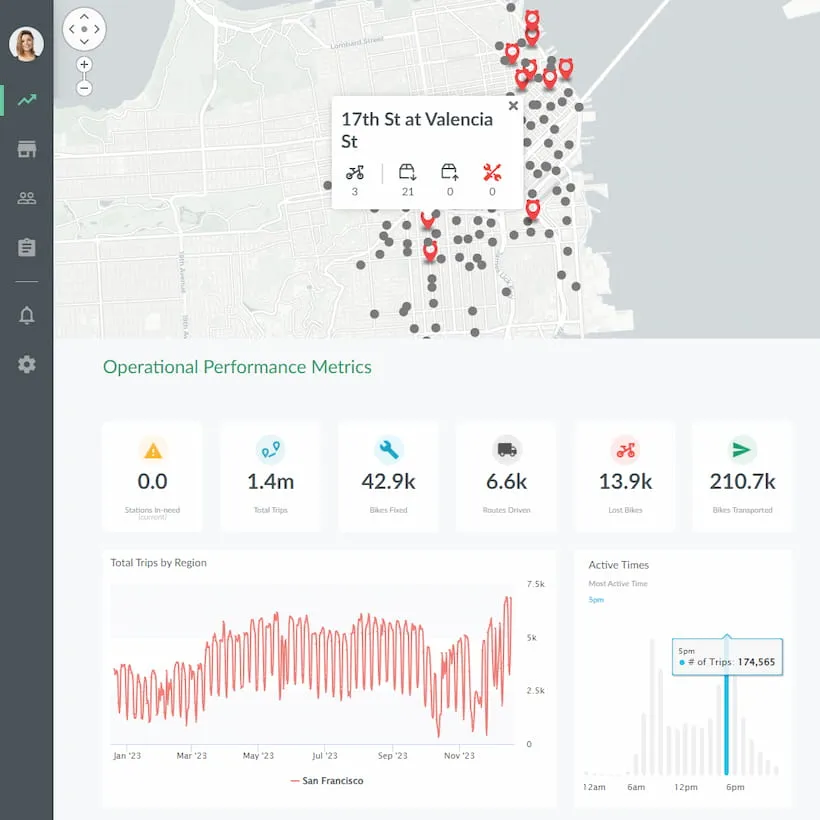
Interactive demo: Bikeshare Embedded BI, supported by Jaspersoft
Experience how to turn data into valuable insights that you and your customers can use to make better decisions.
