



Streamlining your workflows with Jaspersoft's scheduling capabilities

To survive in an increasingly data-driven and competitive world, businesses must now rely on timely access to accurate information to make informed decisions.
For most organizations, that information comes in the form of reports, such as compliance updates, sales summaries, and performance dashboards. But when teams create and share these reports manually, the process can be error-prone, time-consuming, and inconsistent.
That's where report scheduling steps in to automatically generate and deliver information at specific intervals or at a recurring time, significantly improving an organization's ability to make informed decisions, improve workflow efficiency, and scale smarter.
Key benefits of report scheduling
Report scheduling offers numerous benefits. These include time savings, improved data accuracy and consistency, timely data-driven decision-making, enhanced accessibility and collaboration, and cost savings plus resource optimization.
1. Time savings and increased efficiency
Report scheduling significantly reduces the time needed to create reports, generating complex outputs in seconds or minutes. These tasks would take much longer if done manually.
Through report scheduling, employees are able to spend more time on tasks that require human ingenuity, such as interpreting results and planning actions. Report scheduling also boosts operational efficiency, enabling teams to run reports at non-peak times.
2. Improved data accuracy and consistency
Scheduled reporting pulls data from connected systems, such as CRMs, ERPs, and databases. In doing so, it ensures the data is presented according to a standardized template, ensuring every output uses the same calculations and layout, leading to a consistent report, each and every time.
For example, suppose a financial services firm previously created monthly client performance summaries by hand. The manual process often led to reconciliation errors that undermined client trust, leading to lower customer ratings and a lower bottom line. After transitioning to a platform with report scheduling capabilities, the firm successfully automated its reporting workflow, thereby improving client confidence by delivering reliable and consistent information.
3. Dependable, data-driven decision-making
Scheduling capabilities also enable timely, data-driven decision-making. Instead of waiting for end-of-month reports or scrambling for last-minute data, you’ll receive timely insights that make it easy to make data-driven decisions for the day ahead. As a result, you'll be able to deal with problems right on time, notice trends over time, and get continuous feedback to make better data-driven decisions the next day.
With consistent access to fresh, relevant data, delivered via email or to a user's mobile phone, organizations can take a proactive approach to strategy. Emerging trends are easier to spot, giving leaders more time to course-correct before minor issues snowball into costly problems.
Scheduled reports are also rich with data, which means you can easily feed them into machine learning models and forecasting tools to help with inventory control, marketing spend, and resource planning.
4. Enhanced accessibility and collaboration
Besides supporting data-driven decisions, report scheduling plays a vital role in strengthening communication and transparency across an organization.
By ensuring all relevant stakeholders consistently receive the information they need, scheduled reports help foster clearer, more effective collaboration among teams.
This regular information flow improves internal alignment and increases stakeholder engagement over the long term. Thanks to scheduled capabilities, reports are much more likely to be delivered on time.
5. Cost savings and resource optimization
Finally, scheduling capabilities in software lead to cost savings and resource optimization.
That’s because they:
- Cut labor costs: The fewer manual report tasks, the more you can save.
- Optimize IT resources: IT teams don’t have to babysit report jobs or troubleshoot last-minute data pulls.
- Efficiently allocate resources: Scheduling capabilities free up employees to be reallocated to tasks that require creativity and strategic thinking.
Setting up report scheduling in Jaspersoft
Jaspersoft's scheduling capabilities go far beyond basic automation. You can configure reports to run at specific times, set up recurring delivery patterns (daily, weekly, monthly, or custom intervals), and adjust time zones, output formats, and delivery methods based on stakeholder needs. You can also define who receives each report, how it's formatted (PDF, Excel, HTML, etc.), and where it's sent (email, secure file transfer, or embedded dashboards).
With a JavaScript API and seamless data integration, Jaspersoft connects directly to your existing systems to deliver real-time, highly visual reports across your organization. It also empowers non-technical users through self-service reporting and intuitive ad hoc design tools. Multi-tenant architecture and robust access controls ensure secure data management and precise user-level permissions.
If you are ready to unlock the full potential of report scheduling for your organization with Jaspersoft, try a free 30-day trial.
A recognized leader in embedded business intelligence by G2 for Spring 2026, Jaspersoft offers a powerful and flexible platform designed to support day-to-day operations and help visualize long-term strategic planning.
See how automated reporting can help your team move faster, communicate better, and plan with confidence using Jaspersoft pixel-perfect reporting and embedded analytics.
Try Jaspersoft for free for 30 days
Efficiently design, embed, and distribute reports and dashboards at scale with Jaspersoft.
Related Resources

Ready to give it a spin?
Start your 30-day trial now.

Try Jaspersoft - Free Trial
Efficiently design, embed, and distribute reports and dashboards at scale with Jaspersoft.

Build versus Buy: An In-depth Guide
This whitepaper provides a framework for the decision-making process and critical trade-offs between building or buying an embedded BI and reporting tool.
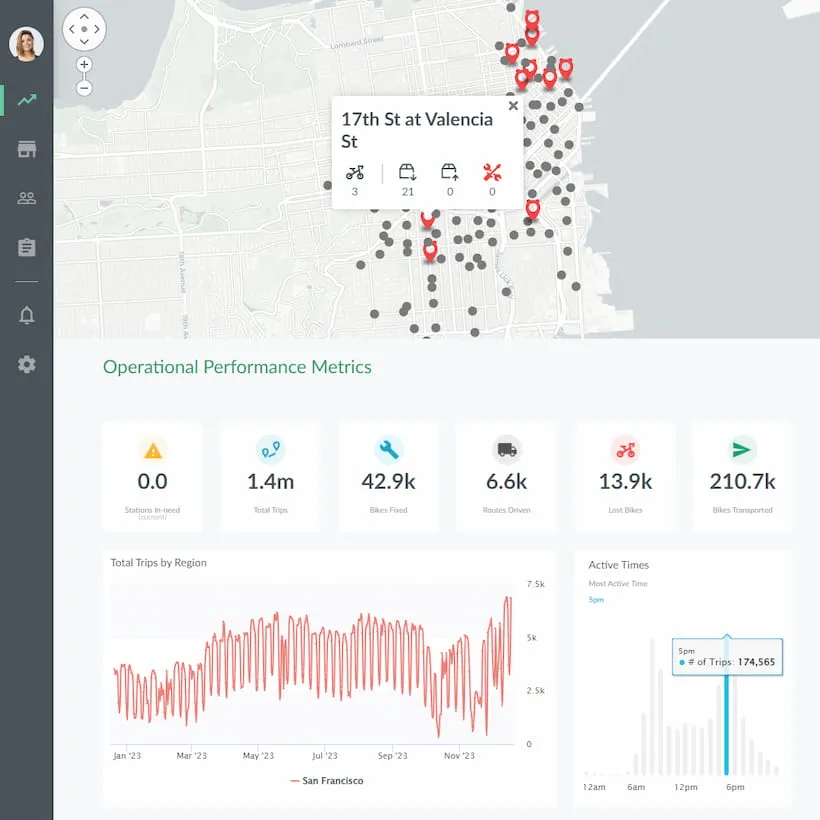
Interactive demo: Bikeshare Embedded BI, supported by Jaspersoft
Experience how to turn data into valuable insights that you and your customers can use to make better decisions.
