



Data governance in healthcare

To integrate effective reporting within a technology framework, hospital leaders must understand the importance of data governance in healthcare. It standardizes data across systems, ensuring both the accuracy and structural consistency of published reports.
The strategic importance of data governance in modern healthcare systems
The healthcare industry generates vast amounts of data — approximately 30% of all data worldwide as of 2024, according to the Global Health Journal . Data governance plays a crucial role in standardizing and verifying the information a hospital collects, processes, and analyzes.
A governance framework unifies the process of patient data collection across all sources, from electronic health records (EHRs) to laboratory results. This standardization streamlines data cleaning, laying a foundation for effective reporting.
Governance also ensures the accuracy of data as it moves through the pipeline. Standardized formatting and processes help to prevent issues such as duplicate records and null fields, which can skew reporting results and impact decision-making.
Finally, governance provides the rules that support healthcare data compliance, which requires strict access control and documented authorization. System administrators can integrate self-service analytics that allow authorized individuals to view and interpret relevant information without risk of exposure.
Core pillars of a healthcare data governance framework
All data governance frameworks rest on four standard pillars: people, process, quality, and security. Together, they lay the foundation for reporting with accurate, trustworthy data.
People: Healthcare Data Stewardship and Ownership
Chains of accountability are crucial in healthcare reporting, where multi-departmental data powers critical reports. To reduce error risk in high-impact financial and operational reports, governance assigns ownership and stewardship to each dataset. The data owner is ultimately responsible for the integrity and usability of assigned datasets, while the steward ensures the quality of each data point.
Ownership and stewardship must be clear at each stage of the reporting workflow. Governance provides this accountability and establishes shared standards that apply across departments, thus reducing the risk of reporting errors.
Process: Data Management
Governance frameworks also provide standardized workflows for the collection, transformation, and review of high-impact data. The impact of these standardizations is particularly evident in financial reports, where a minor interpretation error can lead to inaccurate reporting and have serious consequences for the organization.
Governance standardizes change management and version control processes, ensuring proper tracking and attribution of updates. This helps report developers identify and correct inconsistencies throughout the data pipeline, while providing a paper trail for audits.
Quality: Data Accuracy
By establishing a system of checks, balances, and validations, data governance reduces the risk of error in published or shared financial reporting. It protects EHR data quality and ensures ongoing alignment with related data from billing, claims, and other departments.
Without a standardized framework, data integration can easily create errors that appear in financial or operational outputs. A quality standard introduces checkpoints that reduce the need for reconciliations and restatements that can erode trust, extend project timelines, and increase costs to the department.
Security: Data Protection and Compliance
Given the high stakes of data privacy in healthcare and corporate financial reporting, access authorization must be a priority. Governance frameworks establish an authorization protocol that reduces the risk of non-compliant access while maintaining an access record for regulatory review.
Operationalizing Governance: The Build vs. Buy Reporting Decision
There are two pathways to implementing a governance framework. The first is to create your own engine from scratch, from access control layers to logic pathways. The alternative, an out-of-the-box solution, allows for faster implementation but may offer fewer customization options.
Scratch Builds: Pros and Cons
A custom governance engine gives a hospital leader full control over modeling. It accommodates unique use cases, including unconventional organizational structures, and allows the development team to adapt permission layers as needed.
However, a scratch build also increases your time-to-launch and imposes a long-term maintenance burden. There is no outside entity to scale the governance engine if and when hospital structures change or the organization grows.
Bespoke solutions may also pose a higher risk of security gaps. Ground-up permission systems and tenant isolation may not cover all possible use cases, especially given the complex organizational structures present in healthcare. Ensuring comprehensive security is a significant undertaking and may burden a hospital's development team.
Embedded Reporting Tools
Unless a hospital's compliance requirements are unusually complex, embedded on-premises reporting tools may provide more benefits. These tools include the multi-tenant support needed for governance in a complex healthcare organization, without the need to build out each access point. Administrators can manage distribution and access out of the box, without the downtime necessary to build a security architecture.
With a multi-tenant platform such as Jaspersoft, hospitals can control all users' access from a single environment. Data stewards and owners can create private analytical content repositories and customize user assignment as needed, creating a fully scalable access and distribution framework.
The pre-built solution can launch quickly and with minimal setup, removing the security vulnerability of a months-long custom build. Operations are smoother going forward, thanks to platform-level maintenance and scalability, which may also reduce total operational costs.
From Governance to Insight: Scaling Role-Based Reporting Workflows
For healthcare organizations managing regulatory filings and other complex reports, where inaccuracies can trigger compliance issues, effective governance provides reliability. It defines access structures, ensures consistent data formatting and sourcing, and documents the process end-to-end.
Effective frameworks include role-based components that formalize access pathways. By establishing need-to-know access, they protect the organization from unnecessary exposure risk. Developers have ensured access to the necessary datasets, notebooks, and related tools, while end users only see relevant outputs.
Platforms like Jaspersoft allow hospitals to maintain this clarity across all data-related tasks, including high-volume reporting. A manual, error-prone process becomes a reliably repeatable system that delivers the right information to the right person, at the right time.
Ensuring Long-Term Data Integrity and Reporting Readiness
A clear data governance framework is the foundation of trustworthy, pixel-perfect documents. It provides the foundation on which developers can build trustworthy tabular reports, embeddable data visualizations, and supported recommendations without unnecessary risk of error.
Developers are empowered to build interactive analytics for stakeholders at multiple levels. Compliance teams can focus on larger issues rather than worry about permissions, and end users can trust the reports they receive. The entire organization can stop choosing between comprehensiveness and compliance, because Jaspersoft provides both.
Explore Jaspersoft solutions today to see what our embedded analytics and reporting solutions can do for your team.
Ready to give it a spin?
Start your 30-day trial now.

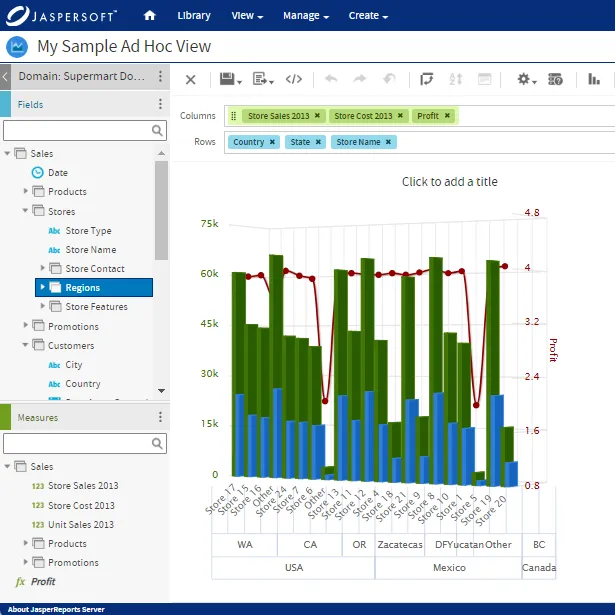
Try Jaspersoft - Free Trial
Efficiently design, embed, and distribute reports and dashboards at scale with Jaspersoft.
Build versus Buy: An In-depth Guide
This whitepaper provides a framework for the decision-making process and critical trade-offs between building or buying an embedded BI and reporting tool.
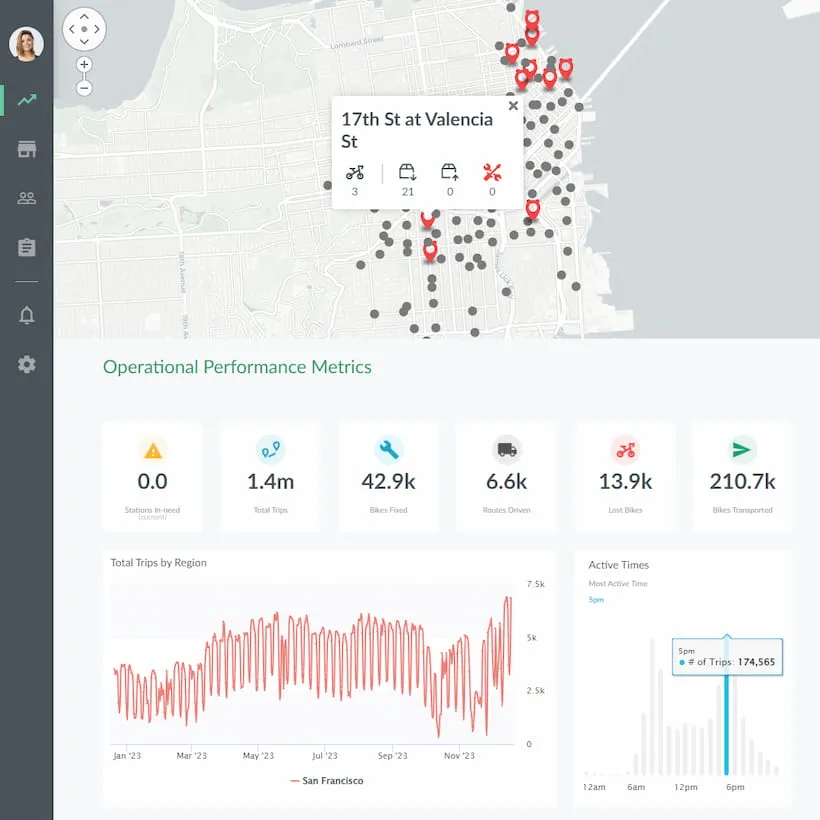
Interactive demo: Bikeshare Embedded BI, supported by Jaspersoft
Experience how to turn data into valuable insights that you and your customers can use to make better decisions.
