



Designing hybrid cloud architectures for embedded reporting and scalable document generation
A few years ago, there was a massive migration of organizations from on-premises reporting infrastructure to cloud computing. While cloud reporting promised cost savings and scalability, limitations, such as compliance concerns and latency issues, eventually emerged. This has led to a recent uptick in adoption of hybrid cloud computing architectures, which combine cloud and on-premises systems.
Nevertheless, a question that constantly comes up for OEM platform teams and enterprise architects building embedded analytics into products that handle sensitive or regulated data is: how do you architect a reporting layer that runs reliably across both on-premises data environments and cloud-based compute? Here’s a practical breakdown of how to approach it.

Core components of a hybrid cloud computing architecture for reporting
A hybrid cloud infrastructure looks different from a standard enterprise cloud or enterprise setup. The architecture is less about general workloads and more about balancing data locality, rendering performance, compliance, and delivery speed.
For instance, in sectors where regulatory controls limit where data can stay or move, sensitive data tends to remain on-premises behind a firewall. As for rendering and exception (the reporting engine), they’re offloaded to cloud infrastructure where they can scale horizontally on demand.
The two sides (cloud and on-premises) communicate through secure APIs, encrypted tunnels, or gateways. It starts with the reporting engine sending a query from the cloud. Once it receives a result set, it renders the output without the raw data ever leaving the controlled (on-premises) environment.
This separation is vital during reporting spikes, such as month- or year-end periods when large-scale reports are required. It keeps rendering elastic and, at the same time, protects data locality in hybrid cloud. This helps teams from falling into the trap of overbuilding internal infrastructure.
Scaling document generation via containerized reporting engines
One of the biggest advantages of modern hybrid cloud infrastructure design is the ability to containerize reporting services.
Containerized reporting engines make scaling far more predictable. Instead of maintaining large fixed reporting servers, teams can spin up rendering nodes dynamically during heavy workloads and scale them down afterward. This matters for OEM platforms and embedded analytics providers handling bursty traffic patterns.
For example, a SaaS platform may see normal reporting traffic throughout the day, then suddenly process thousands of scheduled reports at midnight across multiple customer regions. Kubernetes orchestration makes it possible to distribute those rendering jobs across temporary containers without affecting application performance.
Containerized reporting services also simplify deployment consistency. Development, staging, and production environments can run identical reporting stacks regardless of whether they are deployed on AWS, Azure, Google Cloud, or private infrastructure. That reduces environment drift and makes debugging much easier for engineering teams.
From an OEM perspective, architecture-agnostic deployments are especially valuable. Software vendors often support customers with different infrastructure requirements. Some customers demand fully hosted deployments. Others require private cloud isolation or fully on-prem installations.
A reporting engine that can move cleanly between environments avoids maintaining separate reporting products for each deployment model. API-first document generation also becomes easier in containerized environments. Developers can trigger rendering jobs through REST APIs, queue report requests asynchronously, and integrate report delivery directly into existing application workflows.
That flexibility is hard to achieve with tightly coupled legacy reporting stacks.
Addressing data locality and latency in distributed environments
When the report rendering engine is cloud-hosted, and the data source is on-premises, latency becomes the central operational concern. A report that queries a large dataset across a WAN link will not perform the same as one running against a local database. In fact, in high-volume scenarios, that gap compounds.
There are a few practical approaches to managing this.
- Result caching at the engine layer. For reports that run on static or slowly changing data, caching the result set at the cloud rendering layer eliminates repeat trips to the on-prem source. This works well for scheduled reports where the underlying data is cut at a known point in time (close-of-business, end-of-quarter).
- Secure gateway middleware. Rather than opening direct database connections through the firewall, a local API gateway or data service can handle query execution on-prem and expose clean, paginated JSON endpoints to the cloud-side report engine. This also simplifies security policy—the gateway is the only outbound surface that needs to be managed.
For cloud-native reporting architectures, API-first data access is the default pattern. Jaspersoft's data adapters support JDBC, REST, and custom data sources, which means the engine can work with whatever access pattern fits the security model of the environment.
Compliance also matters. If data cannot cross a geographic boundary, (GDPR residency requirements being the common example) the architecture needs to enforce that at both the policy and connectivity layers. Regional cloud deployments paired with local data gateways are one approach that satisfies both the latency and residency constraints.
Architectural patterns for embedded analytics in hybrid SaaS
Embedded analytics introduces another layer of complexity because reporting is no longer isolated from the product experience.
Hybrid SaaS architectures often solve this using white-label embedded reporting combined with centralized rendering services. Deep linking also becomes important in distributed deployments. End users should be able to open reports directly from application workflows without navigating separate reporting portals.
For software vendors, this consistency helps preserve the look and feel of the host application while still delivering interactive reporting capabilities.
Security and compliance for regulated document pipelines
Regulated industries have non-negotiable requirements for document pipelines. The architecture has to account for encryption, access control, audit logging, and in some cases, the ability to prove exactly what data was used to generate a specific document.
- Encryption in transit and at rest. All communication between the on-prem data layer and cloud rendering layer should be encrypted via TLS 1.2 or higher. Output documents should be encrypted at rest if they’re stored in cloud infrastructure before delivery.
- Output integrity for regulatory documents. For financial statements or compliance reports where the output is a matter of record, the rendering pipeline should produce bit-identical outputs for the same inputs.
- Audit logging at the job level. For HIPAA and SOC 2 compliance, the reporting pipeline needs to log who requested a report, when it ran, what data it accessed, and what was produced. That log needs to be tamper-evident and queryable. Jaspersoft generates job-level audit data that can be forwarded to a SIEM or compliance logging system.
Managing this across a hybrid deployment adds complexity, but it’s tractable. The key is treating compliance requirements as architectural constraints from the start, not as a checklist applied at the end.
Learn more about scalable reporting deployment strategies here: Jaspersoft cloud deployment solutions.
Ready to give it a spin?
Start your 30-day trial now.

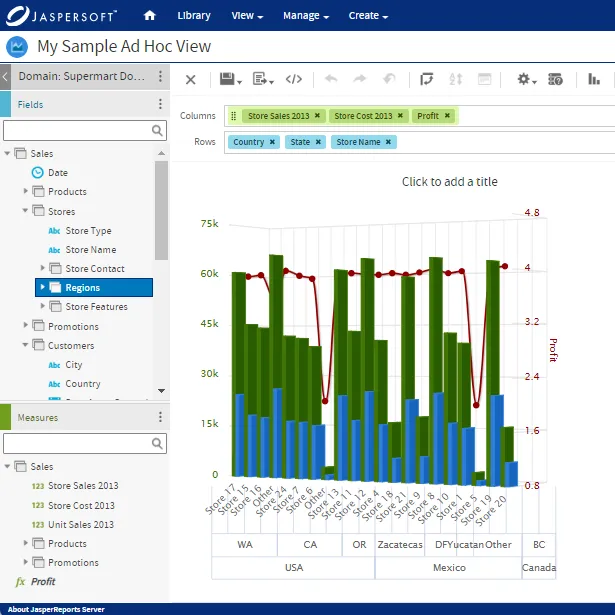
Try Jaspersoft - Free Trial
Efficiently design, embed, and distribute reports and dashboards at scale with Jaspersoft.
Build versus Buy: An In-depth Guide
This whitepaper provides a framework for the decision-making process and critical trade-offs between building or buying an embedded BI and reporting tool.
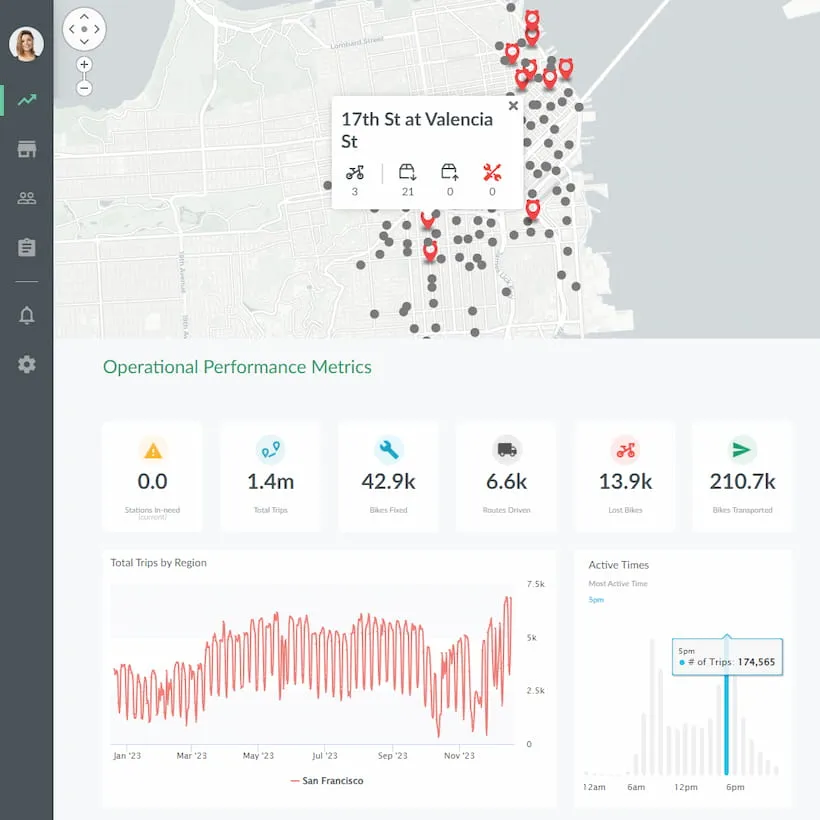
Interactive demo: Bikeshare Embedded BI, supported by Jaspersoft
Experience how to turn data into valuable insights that you and your customers can use to make better decisions.
