



Enhancing business agility with embedded reporting for real-time insights

Businesses are increasingly challenged today because of shifting customer behaviors, rising operational demands, and teams relying on a growing stack of tools that don’t always speak to each other. Leaders must, therefore, make quick, confident decisions, but the reality is that their data is scattered across dashboards, business intelligence (BI) platforms, and spreadsheets that sit outside the daily workflow.
When information lives in systems that require constant jumping back and forth, exporting files, or waiting on an analyst to pull a report, agility takes a hit. By the time insights surface, the moment that triggered the question has already passed.
That’s why embedded reporting should be an imperative part of original equipment manufacturers' (OEMs) applications. Instead of asking users to hunt for answers, they get real-time visibility inside the products. It shortens the distance between seeing what’s happening and acting on it, which is ultimately what helps organizations stay adaptable in unpredictable markets.
Read on for an in-depth guide to embedded reporting, including how it works, its benefits, and how to choose the right platform.
What is embedded reporting and how it works
Also referred to as embedded BI (business intelligence), embedded reporting is the practice of placing reports, dashboards, and data views directly inside a software application. Instead of forcing an end user to leave their workflow, log in somewhere else, and hunt for information, embedded reporting integrates those insights into the interface they already use and know.
Embedded reporting differs from traditional reporting in that, instead of a user opening a separate reporting platform, the data lives inside their product experience. To achieve this, developers usually leverage application programming interfaces (APIs), iframes, or software development kits (SDKs) to blend reports seamlessly into the application’s layout, style, and permissions.
This is why embedded reporting supports stronger user experience design. The end user sees the data in context. They don’t switch systems, break focus, or lose track of what they’re doing. For OEMs and software teams building custom tools, embedded reporting becomes part of the workflow instead of an extra step.
Key benefits of embedded reporting for modern businesses
Real-time visibility is the standout advantage of embedded reporting. The moment critical information updates, the end user sees it. Hesitation evaporates, and decisions that used to take hours can now happen immediately. This real-time insight is the bedrock of true business agility.
A few more benefits consistently rise to the top, including:
- Real-time awareness: When reports refresh automatically inside the tools people already use, teams see changes as they unfold and understand the story behind them. Operations teams can spot bottlenecks before they snowball. Product managers can track how features behave in different environments and catch unexpected patterns sooner. And customer-facing teams can respond to issues or opportunities with context instead of assumptions. In short, everyone works within the current context that supports smarter, more grounded decisions.
- A smoother user experience: Keeping everything in one place cuts out extra steps. The actual steps become fewer because insights simply appear naturally within the flow of work. Users don’t have to switch tools, export files, or chase down reports.
- Increased efficiency across the board: Technical staff can focus on building product functionality instead of reinventing reporting from scratch. On the other hand, non-technical users spend less time switching between tools and more time acting on clear data.
Essential features of a powerful embedded reporting solution
Compared to traditional reporting, there are key embedded reporting features that tools must possess to support advanced analytics and fast, informed decision-making inside a custom application. These include:
- White-labeling: The solution needs to be able to adopt your application’s branding, color scheme, and navigation to provide a seamless end user experience.
- Interactive, context-driven reporting: Instead of a one-size-fits-all approach, the platform should support a range of reporting needs, from highly formatted, pixel-perfect reports for legal or financial documents to ad hoc and self-service reporting for business users who need to explore data on their own terms. It should give users control. Embedded input controls like filters and parameters can help with that. They give users the ability to tailor reports on the fly, such as adjusting data views and drilling into specific segments — all without leaving the app. This is a core component of modern embedded analytics.
- API-driven architecture for flexible integration: An API-first design allows developers to programmatically manage every aspect, from pushing and pulling information, calling applications, report rendering and scheduling to security. This ensures the analytics become a true feature of your product, not a bolted-on afterthought.
How embedded reporting improves data-driven decision-making
When reporting is embedded right into an application that users need for their everyday workflows, their decision-making becomes faster, more contextual, and more reliable.
Embedded reporting also supports interactive exploration of reports for deeper insights (if the tool allows for that). Modern users expect to drill down into charts, filter on the fly, and ask new questions using their data. Interactive dashboards within an embedded reporting framework empower them to do just that, leading to deeper, more nuanced insights.
With Jaspersoft, organizations can still achieve the same level of agility with a standalone reporting environment and centralized reporting portal. The key is putting the right insights in the right context, using clean data, and choosing a tool with strong data visualization capabilities.
Choosing the right embedded reporting platform
An embedded reporting tool that works for one organization may not work for another, even if they’re in the same industry. Businesses are unique, and so are their needs and goals. Therefore, business leaders must be very intentional when it comes to choosing reporting tools.
The key factors usually come down to scalability to support growing user demand and support for customization, so the reporting experience blends seamlessly with the product’s look and feel. The deployment flexibility across on-premise, cloud, or hybrid environments, and a security-first design that protects data through strong controls and architecture are equally important.
Jaspersoft stands out as the perfect embedded reporting platform built with these needs in mind. This API-first, fully embeddable platform provides users with powerful tools for pixel-perfect reporting, self-service ad hoc data analysis, rich data visualization, and secure reporting.
Try Jaspersoft for free today and see firsthand how a purpose-built embedded reporting solution can transform your application and organization as a whole.
Ready to give it a spin?
Start your 30-day trial now.

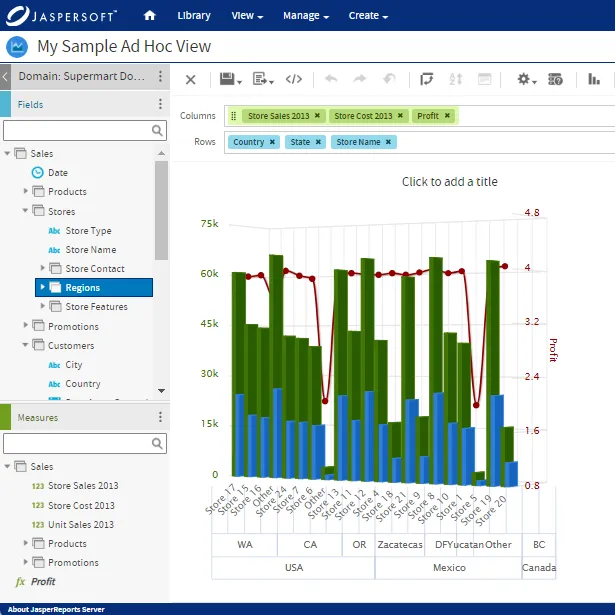
Try Jaspersoft - Free Trial
Efficiently design, embed, and distribute reports and dashboards at scale with Jaspersoft.

Build versus Buy: An In-depth Guide
This whitepaper provides a framework for the decision-making process and critical trade-offs between building or buying an embedded BI and reporting tool.
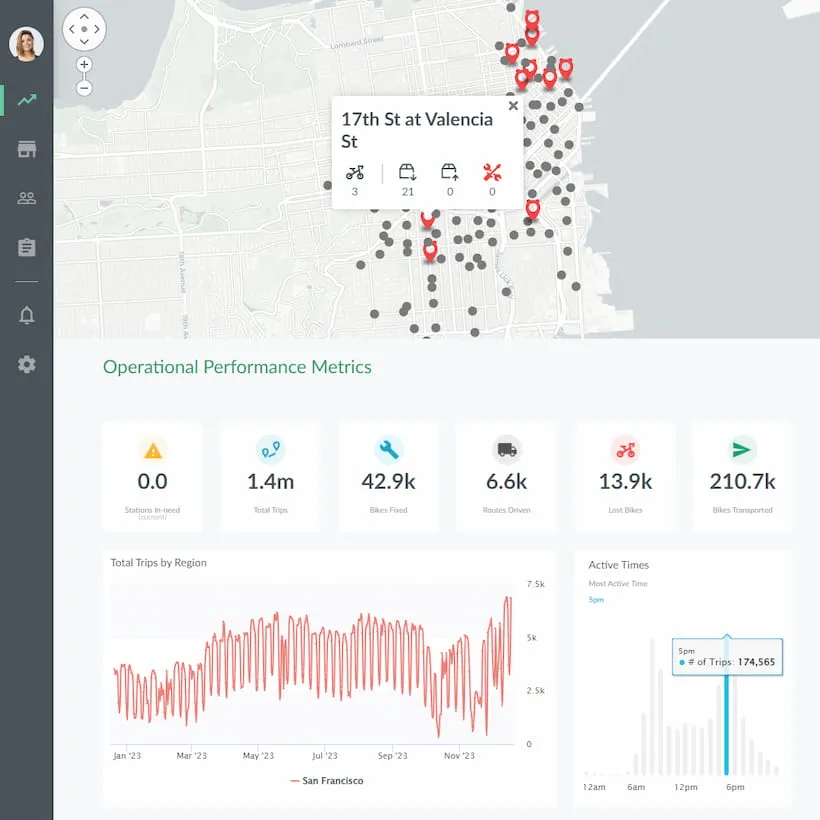
Interactive demo: Bikeshare Embedded BI, supported by Jaspersoft
Experience how to turn data into valuable insights that you and your customers can use to make better decisions.
