



Top 5 compliance-driven reporting use cases in state & local government

Reporting isn’t just for profit-making organizations — state and local governments also depend on it just as much. While both private organizations and governments majorly rely on reporting for operations, for state and local governments, the stakes are different, probably even higher. Reporting for governments is directly tied to transparency and accountability. Any reports that these governments produce may be subject to scrutiny from the public, auditors, and legislators. As such, government reporting solutions need pixel-perfect, consistent, and audit-ready documents every single time.
1. Annual comprehensive financial reports and budget tracking
An Annual Comprehensive Financial Report (ACFR) is one of the most format-sensitive documents that state and local governments produce. This is because it must follow strict accounting requirements outlined by the Governmental Accounting Standards Board (GASB) , such as how numbers should align across columns or how charts should render in grayscale for printed records. Moreover, auditors and other oversight bodies must review it.
ACFR contains hundreds of pages that pull together financial statements, notes, and statistical sections. If formatting inconsistencies, such as a misaligned table or an inconsistent font, appear, they can lead to misinterpretation or, worse, audit findings. With audit findings, teams have to pause for investigations to take place. This often means reconciling numbers again and regenerating reports. As a result, credibility issues come up, and operational costs increase.
With government financial reporting software that supports pixel-perfect reporting, government agencies can avoid these issues. It gives finance teams precise control over every element of a multipage financial statement, including page breaks, numeric formatting, column widths, and header repetition. This way, what goes to the auditor or end user matches the original design every time. It also ensures that formatting remains the same across different versions — on paper, in PDF, on screen, etc.
2. Automated public transparency and open data disclosures
Unlike private business, public transparency isn’t optional for government agencies. Open data disclosures require governments to make public-sector information available to constituents for access, use, and sharing. This can often create a high-volume distribution problem because these institutions must respond to dozens, if not hundreds, of requests at a time.
To handle these volumes, government reporting solutions should support automated report scheduling and standardized export formats. For one, standardized export formats can help resolve version inconsistencies, ensuring that reports produced for public consumption are identical in structure to those retained for internal records. This helps prevent scenarios where different departments send differently formatted versions of a document that don’t match what’s published on the open data portal. As for automated distribution, it ensures that government reporting solutions deliver standardized outputs (PDF, Excel, Word) on a defined schedule or on demand via self-service portals.
3. Case management and health service delivery accountability
Social service and public health agencies deal with some of the highest document volumes in government. Caseworkers and health professionals need accurate, up-to-date information about individuals and cases. As for supervisors, they need accurate reports to monitor program performance and show them to state and federal partners.
More often than not, the systems that these agencies use can’t handle these needs. If workers need reports, they have to leave their systems, export data into spreadsheets, format it, and build reports manually. This slows down processes, increases the chances of errors, and creates inconsistencies in reports.
Embedding reports in government BI solutions via an API or iFrame changes this narrative. With this, government data visualizations and reports appear and feel like a natural extension of the existing system or application instead of having users access them from a separate tool.
4. Grant compliance and federal funding justification
Governments need funding, which comes from federal grants. However, this funding comes with strings attached — agencies must show how they spent every last dollar. Reports help achieve this. In these situations, relying on live dashboards is a common pitfall for most agencies. Why? Because dashboards are dynamic. They correct, update, and restate data regularly.
While this may be useful for exploration, it may not be for regulatory compliance reporting. Auditors don’t need dynamic queries; they need point-in-time snapshots. Effective government BI solutions focused on pixel-perfect reporting help address this by capturing data at the moment of reporting, freezing it, and matching it with the exact layout required for compliance reporting.
5. Legislative briefings and executive performance overviews
During budget hearings or legislative briefings, executives need clear, structured summaries that show how agencies are performing against set targets. These briefings usually require specific formatting requirements, such as consistent layouts, fixed structures, and agency branding. Moreover, these briefings need high-level summaries that are visual but static, instead of live ones.
Government reporting solutions with snapshot features can help with this. Snapshots provide a stable view of performance at a specific point in time, so it’s easy to track progress and compare periods for performance. Those snapshots are also formatted and branded consistently, and ready for distribution.
Snapshot reporting also supports cross-department performance comparability for agencies that manage multiple jurisdictions or departments. This is because every report uses the same layout, making it easy to see which departments are performing better than others.
Experience government reporting solutions
State and local governments face reporting demands that generic BI tools struggle to meet. As such, governments need purpose-built reporting solutions because formatting, accuracy, and distribution consistency are non-negotiable. This is essential so that when users view a report in a custom agency portal, whether exported for a public records request or shared in a legislative session, it renders correctly and consistently.
With a tool like Jaspersoft, this is possible. Jaspersoft supports features like embedded report delivery, pixel-perfect reporting, automated report distribution, and strong public sector data governance for audit readiness. For instance, its embeddability makes it easy to deploy across architectures, including AWS, Google Cloud, and Docker — basically any application environment. Additionally, its pixel-perfect reporting ensures reports render exactly how agencies want them. As for automated report distribution, Jaspersoft takes the pressure off teams that need to generate and share reports at scale.
Find out more about how governments are achieving legacy reporting modernization with Jaspersoft solutions.
Ready to give it a spin?
Start your 30-day trial now.

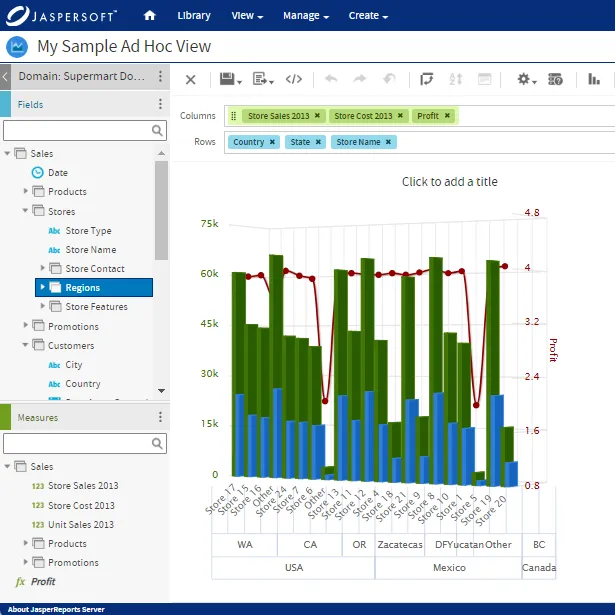
Try Jaspersoft - Free Trial
Efficiently design, embed, and distribute reports and dashboards at scale with Jaspersoft.

Build versus Buy: An In-depth Guide
This whitepaper provides a framework for the decision-making process and critical trade-offs between building or buying an embedded BI and reporting tool.
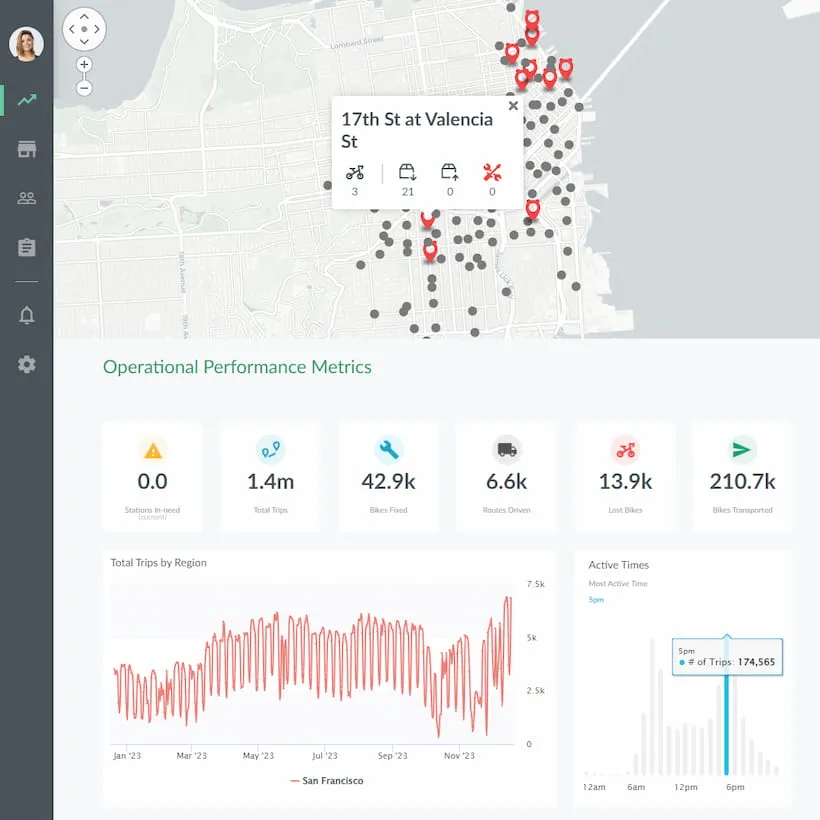
Interactive demo: Bikeshare Embedded BI, supported by Jaspersoft
Experience how to turn data into valuable insights that you and your customers can use to make better decisions.
