



What does the real-time report show when things go wrong?

Real-time reporting gives teams access to real-time data that reveals early symptoms, highlights impact, and provides the context to act fast and find a resolution. These actionable insights help support operational resilience and are imperative for modern applications that help teams stay proactive.
That’s why teams must understand the role of embedded analytics in all of this — they help bring data and insights directly into the applications and workflows that teams use. This way, warning signs aren’t sent to teams when it’s too late because they exist in a separate tool.
This article answers the question of what you can find in the real-time report in depth, how it surfaces anomalies, and how teams can leverage these reports to respond before issues escalate. Let’s dive in.
What is real-time reporting?
Real-time reporting is a form of business intelligence that involves gathering, generating, and distributing up-to-the-minute data to those who matter most (end users). This helps support informed decision-making in organizations as changes occur, especially when time is of the essence.
The definition of “real-time” has been evolving over time. A few years ago, real-time reports meant that dashboards refreshed every couple of minutes. This expectation has changed as technology advances (like the emergence of IoT devices) and data pipelines become faster.
Today, real-time reports must answer: Does the data reflect what’s happening right now? Does it do so without guesswork or lag?
Common issues detected by real-time reports
When something shifts in a system, waiting for batch reports increases the probability of issues blowing out of proportion. Real-time reporting helps prevent this by detecting these issues. Here are some of the most common problems these reports bring to light:
- System performance slowdowns: When a real-time report catches these slowdowns, it can show a sudden drop in active sessions, slower event firing, or page interactions that fall off a cliff. These are early signs of latency, overloaded infrastructure, or something in the request flow that isn’t keeping up. This can look like spinning loaders or frozen screens for end users or an anomaly for developers.
- Missed deliveries: In any event-driven system, there are expected signals that confirm something has moved from one stage to the next. When those events stop appearing, a real-time report surfaces that gap immediately. For instance, in logistics, supply chain, or dispatch applications, triggered events (like “arrived,” “picked up,” or “en route”) drive operations. If those events stop showing up in the real-time feed, teams know something has stalled long before customers notice.
- Data inconsistencies or sync failures: When systems depend on event tracking, API calls, or streamed updates, even small sync issues will show up immediately. A real-time dashboard will highlight things like events triggered out of order, strange spikes from a single source, missing event types, and sharp drops in engagement signals.
- Unexpected revenue or conversion drops: If a checkout flow breaks or a payment provider starts rejecting requests, real-time data shows the conversion drop instantly. That tight feedback loop prevents hours of lost revenue.
- Failed revenue collection: In B2B and enterprise workflows, invoices, contract approvals, and usage-based billing all depend on events firing properly. A real-time feed that suddenly shows fewer completed billable actions is a sign of potential revenue leakage — one of the most expensive issues to catch late.
In most organizations, real-time insights enable faster response from teams. Product managers see drops in engagement. Developers see failed event triggers. Tech executives see revenue impact. Everyone is looking at the same moment-to-moment view, which speeds up communication and reduces the back-and-forth that plagues a slow incident response.
Embedded real-time reporting for operational resilience
Real-time data is valuable on its own, but it becomes even more powerful when it’s embedded directly inside the application that end users rely on daily. With embedded analytics, teams don’t need to jump into a separate tool to see what’s happening. Embedded real-time reporting integrates real-time views into the workflow, which means early-warning insights are part of normal operations.
It also helps maintain a consistent user experience and branding. This is where platforms like Jaspersoft stand out. Pixel-perfect capabilities and seamless embedding allow organizations to customize the look and feel, so the reporting fits the application as if it were built in-house. For original equipment manufacturer (OEM) developers and product teams debating build vs. buy, this level of integration keeps everything on-brand and consistent.
Take DAT Solutions as an example, as they embed analytics into the freight logistics platform. This provides their users with immediate visibility into market conditions and operational exceptions. If a load isn’t moving as planned, the real-time report within the DAT application alerts the user, which enables them to take corrective action instantly.
Another example is Google Analytics 4 (GA4). Used to support digital marketing campaigns, the GA4 real-time report lets marketers or website owners monitor online user activity immediately or as soon as it happens. The real-time dashboard updates continuously, with user interactions updating a few minutes after they occur.
Building a culture of continuous monitoring
Real-time reporting works best when teams treat it as part of everyday operations instead of an emergency-only tool. It transforms operations from being reactive to proactive. Instead of treating issues as isolated incidents, they become patterns to watch, troubleshoot, and prevent.
The return on investment (ROI) of real-time reporting then becomes visible. The tool pays for itself by minimizing impact and maximizing awareness. Organizations start to see fewer outages, faster fixes, reduced revenue leaks, smoother customer experience, and fewer surprises buried in downstream analytics.
Additionally, user engagement and interactions within the organization’s application increase because insights are not only meaningful, they’re actionable and appear right when end users need them.
Turning real-time data into real-world impact
The effectiveness and importance of real-time reports speak for themselves. Instead of waiting for scheduled report views to show insights in hindsight, real-time reporting lets you see and act on issues as they develop.
Jaspersoft makes this possible for teams. It lets organizations embed real-time reports and dashboards into their applications, so users never leave their workflows to hunt for data. Its other features, including pixel-perfect reporting, ad hoc reporting, API-first approach, and open-source architecture, make reporting seamless, so teams can focus on their core processes.
Ready to give it a spin?
Start your 30-day trial now.

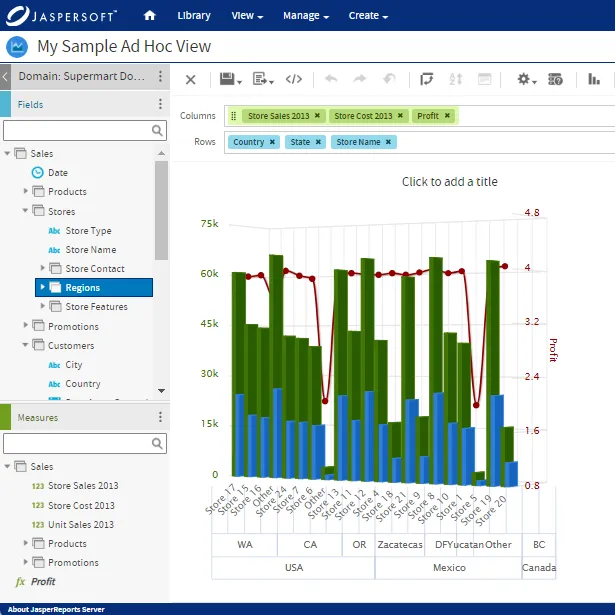
Try Jaspersoft - Free Trial
Efficiently design, embed, and distribute reports and dashboards at scale with Jaspersoft.

Build versus Buy: An In-depth Guide
This whitepaper provides a framework for the decision-making process and critical trade-offs between building or buying an embedded BI and reporting tool.
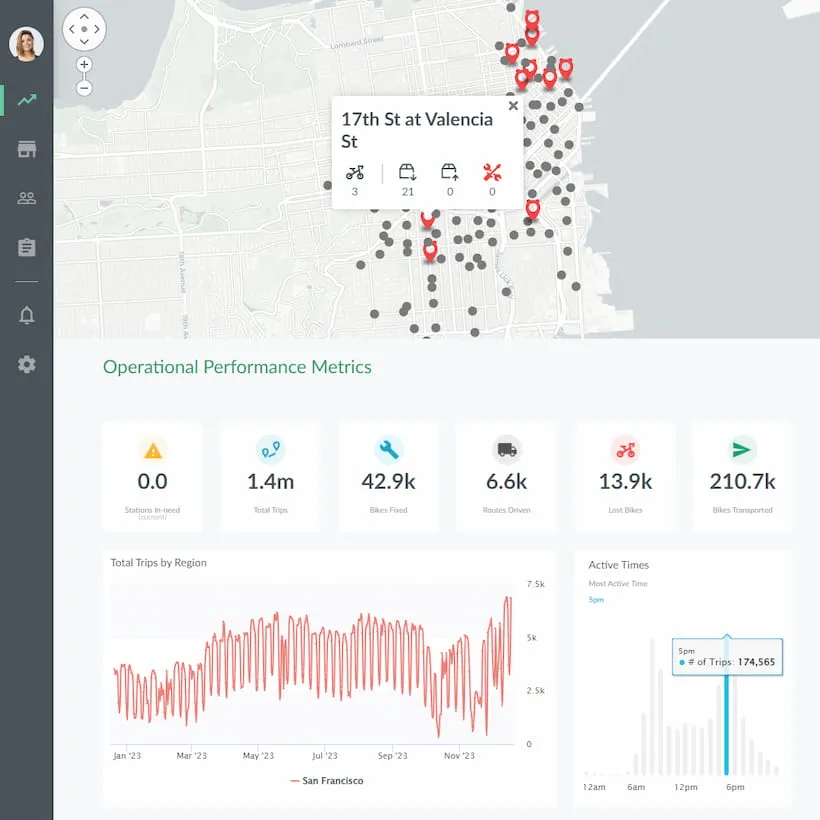
Interactive demo: Bikeshare Embedded BI, supported by Jaspersoft
Experience how to turn data into valuable insights that you and your customers can use to make better decisions.
