



The essential guide to data integration software for businesses

Data integration software plays a critical role in preparing data from diverse sources so that it is centralized, usable, governed, and available for reporting at scale. When these data integration solutions combine data from multiple sources through streamlined and repeatable processes, they create a unified foundation for analysis and operations.
For organizations, clean, timely, and accessible data is key for reporting at scale on the analytics platform without sacrificing performance or trust.
What data integration software actually does for analytics teams
Data integration software serves as the structural bridge between raw data silos and the sophisticated reporting layers required by modern applications. Application teams and product managers rely on data integration tools to transform fragmented inputs into a clean, governed, and well-modeled foundation. Automating extraction, transformation, and loading (ETL) unifies disparate data points from on-premises legacy systems or cloud-based environments into a consistent schema.
This upstream preparation determines the agility of the reporting team downstream. Developers can more efficiently build Jaspersoft Domains or virtual metadata layers without manual cleaning or complex joins at the visualization layer when data is properly modeled during integration. This structural integrity is vital for maintaining high-performance embedded analytics and delivering pixel-perfect reports, such as financial statements or regulatory documents, where data accuracy and precise formatting are non-negotiable.
Key capabilities to look for in data integration software
Data integration software shapes how easily application teams and report developers can turn raw data into reliable reporting outputs. The right capabilities ensure data arrives in the reporting layer clean and consistent. Jaspersoft ensures teams spend less time fixing data issues and more time building high-value reports when integration tools align with reporting needs.
ELT for flexible data preparation
After transforming complex data and sending it to a data warehouse or data lake, the work is shifted downstream to modern cloud platforms by extract, load, and transform (ELT). Product teams benefit when the integration layer supports each pattern without forcing architectural trade-offs. This flexibility ensures reporting tools can query prepared datasets or optimized schemas without added complexity.
Transformation, normalization, and data quality controls
Jaspersoft’s transformation capabilities go beyond basic data mapping. Normalization ensures consistent formats across sources. Deduplication reduces conflicting records. Validation enforces business rules early in the pipeline. Clean inputs reduce the need for report-level workarounds and protect the integrity of customer-facing documents. These components, when implemented in data integration workflows, ensure streamlined, high-quality data outputs.
Support for structured and semi-structured data
Modern reporting environments rarely rely on a single data type. Integration software must handle structured tables alongside semi-structured formats like JSON or XML. This support is critical for embedded analytics and application-driven reporting where operational data lives across APIs, event streams, and cloud services. Jaspersoft’s broad compatibility ensures reporting tools can connect to all required sources without custom pipelines.
Governance, lineage, and trust
Data governance capabilities define whether reports can be trusted at scale. Lineage tracking shows where data originated and how it changed. Metadata management supports several capabilities:
- Consistent definitions across teams
- Self-service analytics
- Data interoperability
- Improved data quality
- Data searchability and discovery
These features help business leaders and developers align on a single source of truth.
Refresh schedules, orchestration, and automation
Software data integration tools should support scheduling, orchestration, and automation across pipelines. Coordinated refreshes prevent stale data and reduce query load during peak usage.
What is the difference between ETL and ELT
ETL cleans data in a staging area before the warehouse, whereas ELT leverages the warehouse's power to transform data on demand. This makes ELT faster during initial loading, but analysis can be slower if data isn't managed well.
ETL is more suited to structured data and smaller data sets, while ELT can process both structured and unstructured data. ELT can be faster because it involves fewer steps than ETL, and ETL also requires periodic, rather than real-time, updates.
How integration choices affect data availability and reporting access
Integration choices made within a data integration platform determine how data surfaces in the reporting layer. Data modeling choices influence whether developers expose domains, curate datasets, or rely on direct queries. Well-structured models simplify access for report authors and application teams. Embedded analytics and self-service reporting depend on predictable schemas and shared definitions across sources.
Latency, freshness, and completeness shape stakeholder expectations. Business leaders expect timely insights while end users expect accurate outputs. Poor integration design creates gaps that will undermine trust. Strong alignment between integration and reporting enables reliable access while preserving performance as usage grows.
Common data integration architectures and how they support reporting
Data integration architectures influence how reporting teams access data and scale delivery. Different patterns support different reporting needs. Understanding these trade-offs helps product managers and developers align integration design with reporting goals.
Warehouse-first and Lakehouse architectures
Warehouse-first architectures prioritize structured data models optimized for reporting. These environments map well to Jaspersoft connectivity through direct database connections and reusable datasets. They suit analytical reports and regulatory documents that require consistency. Lakehouse architectures extend this model by combining structured and semi-structured data. They offer greater flexibility for evolving data sources while still supporting governed datasets for pixel-perfect reporting.
Streaming and hybrid architectures
Streaming architectures focus on near-real-time data ingestion and support operational dashboards that rely on up-to-the-minute data to create visualizations, such as radar charts. Jaspersoft can connect to downstream stores fed by streams rather than raw event pipelines. Hybrid architectures blend warehouses, lakes, and streams. This approach supports operational and analytical use cases while maintaining performance through curated datasets.
Architectural considerations for embedded analytics
Embedded analytics and multi-tenant environments add complexity. Integration pipelines must isolate tenant data while preserving shared models. Scalable architectures support dataset reuse across applications and also reduce query load during peak usage. The right architecture ensures consistent reporting performance without sacrificing flexibility for product teams.
Build a data foundation that scales with your reporting needs
Distributing reports at scale starts with consistent and accessible data. Teams gain more value by focusing on clean models, shared definitions, and reliable data pipelines than by debating specific software data integration tools. When data arrives governed, reporting teams can move faster and scale with confidence.
How much does data integration software cost?
Data integration software costs anywhere from about $1,000 to over $100,000 per year. The cost will vary widely depending on the volume of data, complexity of your system, number of users, features needed, customization requirements, number of integration points, and type of deployment (cloud vs. on-premises).
Why choose Jaspersoft
Jaspersoft is a top choice if you need flexible, cost-effective, embedded analytics solutions for your data integration. The integration software can connect natively to a wide range of data sources to help create a unified view of data. It is also architecture-agnostic, so you can load it into pretty much any environment, whether on-site, in the cloud, or in a hybrid solution.
Jaspersoft offers embedded reporting and comprehensive dashboards to help in data analysis and data adoption. Jaspersoft is also more cost-effective with flexible licensing models compared to other BI tools.
Contact us today to learn which data integration approach is right for your organization.
Ready to give it a spin?
Start your 30-day trial now.

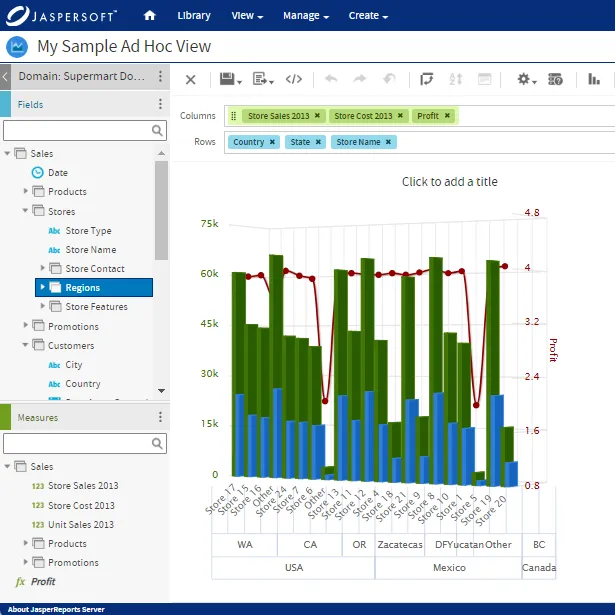
Try Jaspersoft - Free Trial
Efficiently design, embed, and distribute reports and dashboards at scale with Jaspersoft.
Build versus Buy: An In-depth Guide
This whitepaper provides a framework for the decision-making process and critical trade-offs between building or buying an embedded BI and reporting tool.
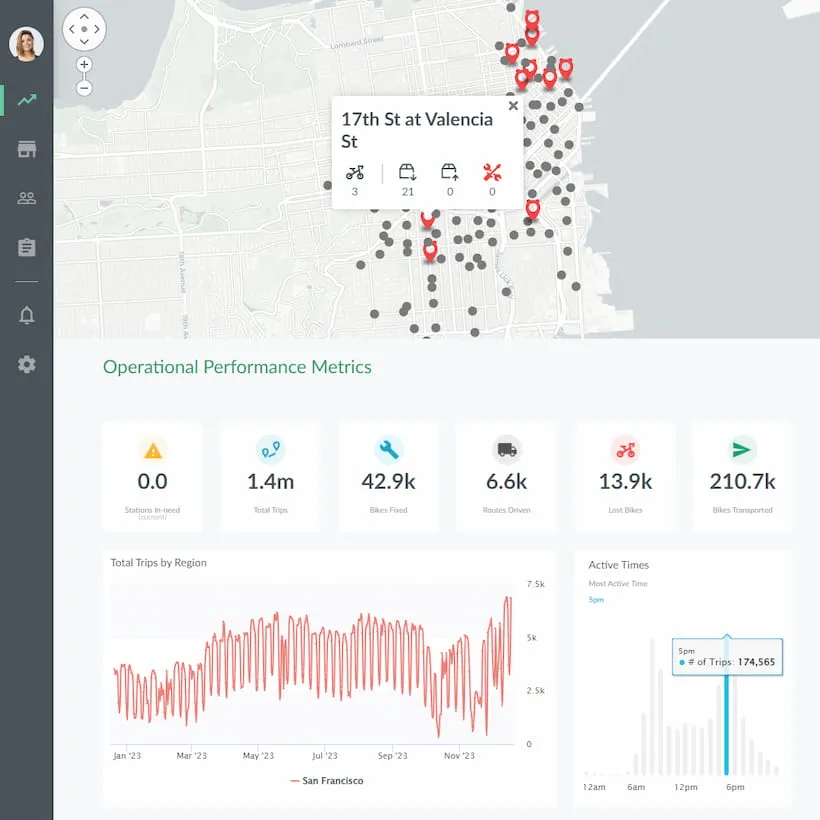
Interactive demo: Bikeshare Embedded BI, supported by Jaspersoft
Experience how to turn data into valuable insights that you and your customers can use to make better decisions.
