



Modernizing supply chain data analytics without replacing core systems
Today's supply chains generate massive amounts of data. Original equipment manufacturers (OEMs), fulfillment and distribution centers, carriers, and end consumers all create vast quantities of structured and unstructured data, all of which can help resolve inefficiencies, uncover new market trends, and reveal opportunities for further growth. Supply chain data analytics mines these datasets for actionable insights that can improve the health of your supply network, but the process can require some organizations to overhaul their current systems, costing valuable time and resources.
Fortunately, companies can implement embedded reporting tools to avoid these costs, making use of their supply chain data quicker — without the hassle of replacing legacy systems. Such tools not only enhance your supply chain visibility by delivering a more unified picture of your operations, but they can streamline workflows by providing a single source of truth for your data, and can simplify data governance initiatives by creating greater uniformity across disparate supply chain environments.
This article will look at the role of embedded analytics in modern supply chains, and how embedded analytics solutions can help organizations consolidate their supply chain data, turning unstructured data into a competitive edge.
The high cost of legacy system replacement in supply chain management
The old method of "rip and replace" is failing modern businesses, costing them time, effort, and money. Replacing legacy supply chain management platforms can cost tens of thousands or even millions of dollars, depending on the scope of implementation and any customizations required, and may take months to complete. Some new systems also come with a steep learning curve that can slow down employees, hindering their productivity.
Implementing a new system also requires migrating massive datasets from former tools such as legacy WMS or ERP platforms. Errors during WMS data migration or ERP integration can result in deleted, corrupted, or misplaced data, which can set back other company operations. It can also create discrepancies in your supply chain data, risking missed potential orders and costly fulfillment errors.
An embedded analytics solution lets businesses avoid these risks and save money by continuing to use the tools in their current environment. Instead of adding new tools with complex functionalities, embedded analytics solutions integrate seamlessly into existing infrastructures. Their built-in analytics capabilities enable real-time supply chain data analysis, and pixel-perfect reporting features provide easily accessible formatting that empowers business leaders to make more data-driven decisions. The result is more actionable supply chain data analytics — without replacing your current systems.
Architectural patterns for unified supply chain visibility
Without embedded analytics solutions, businesses may struggle to maintain a coherent picture of all their supply chain's inner workings. Because legacy systems rely on multiple platforms and architectures, they are often unable to integrate all supply chain datasets into one place, limiting supply chain visibility. Embedded reporting solutions solve this problem by simplifying how analysts handle their data. Two key features of data analytics tools include:
- Data virtualization. Data virtualization lets users copy and query live data without having to migrate it from scattered logistics silos. This simplifies the process of accessing supply chain data and reduces the risk of errors that could occur during migration.
- Semantic layers. Located between the raw data and the end user, semantic layers translate complex analytics operations into everyday business terms. This removes the technical jargon needed for performing supply chain analytics, enabling non-technical personnel to perform supply chain analytics tasks such as generating ad hoc reports.
By implementing analytics tools with these capabilities, team members at every level gain easier access to the insights that supply chain analytics provides. They also obtain a clearer, more accessible picture of the health of their supply chain, identifying areas for improvement with ease.
Embedding analytics directly into logistics workflows
One way companies can enhance business agility with embedded reporting insights is to embed them into daily logistics workflows. Using an API-first approach, developers can place analytics directly into procurement, inventory, or other workflows, even automating some tasks with the use of AI. Doing so not only streamlines supply chain operations, but the improved accessibility enables managers to make faster, more data-driven decisions.
Ensuring data governance across multi-vendor ecosystems
Embedded analytics solutions also improve data governance by making supply chain data silos more uniform across multi-vendor environments.
As we mentioned in our guide to data integration software, proper data governance improves data quality and security, so that organizations can use their data effectively. Maximum data quality is especially important for diagnostic and predictive data analytics, where the objective is to understand the root causes of an occurrence and to anticipate future supply chain behavior. Forecasting demands, avoiding potential stockouts, and understanding production bottlenecks becomes impossible without adequate data quality, so ensuring maximum uniformity and accuracy is a must.
Despite this need, supply chain data can be particularly inconsistent, as it often comes from a wide range of vendors, IoT sensors, and external channels. Embedded analytics tools can automatically apply certain governance frameworks or policies to supply chain data, ensuring greater uniformity across disparate data sources and enabling more accurate analysis.
Future-proofing the supply chain tech stack
As the role of data analytics in supply chain management continues to grow, embedded reporting solutions will integrate AI and machine learning to further expand their capabilities. Instead of relying upon historical data to describe past or current supply chain events, they'll not only anticipate product demand, market disruptions, and other future scenarios using predictive analytics, but will leverage prescriptive analytics to create proactive strategies for how to respond to the very scenarios that they predict. As AI algorithms become more advanced and distributed across multiple platforms, such intelligence will depend upon a flexible, architecture-agnostic tool that can integrate with any system anywhere — a functionality that embedded analytics provides.
Jaspersoft delivers embedded reporting solutions to a wide range of industries, including supply chain management and logistics. By eliminating the need to replace legacy systems, Jaspersoft lets business leaders unlock their supply chain data analytics' fullest potential, so that they can anticipate potential bottlenecks, expedite fulfillment and delivery timelines, and align production to meet consumer demands. The result is a smarter, more resilient supply chain that turns insights into a competitive edge — without a costly rebuild.
To see how we equip businesses with the flexibility and built-in reporting functionalities needed to convert their data to action, check out Jaspersoft's embedded analytics solutions today.
Ready to give it a spin?
Start your 30-day trial now.

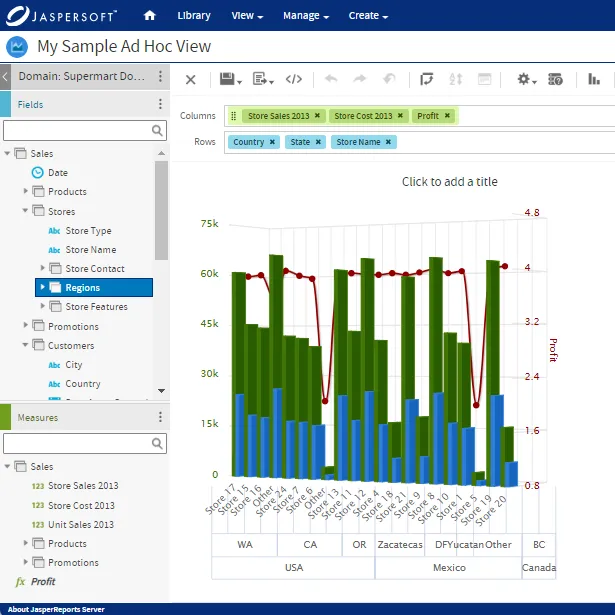
Try Jaspersoft - Free Trial
Efficiently design, embed, and distribute reports and dashboards at scale with Jaspersoft.
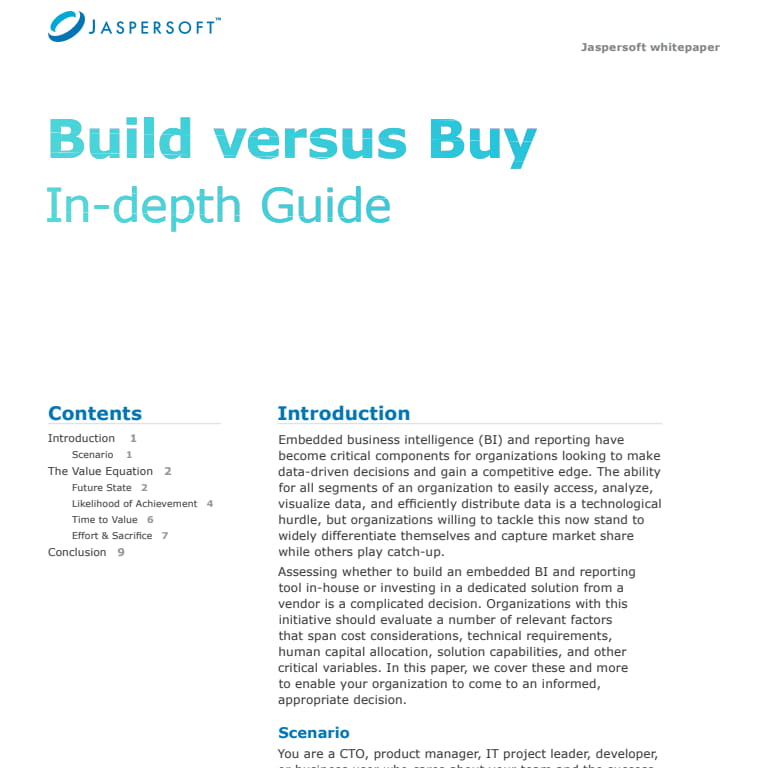
Build versus Buy: An In-depth Guide
This whitepaper provides a framework for the decision-making process and critical trade-offs between building or buying an embedded BI and reporting tool.
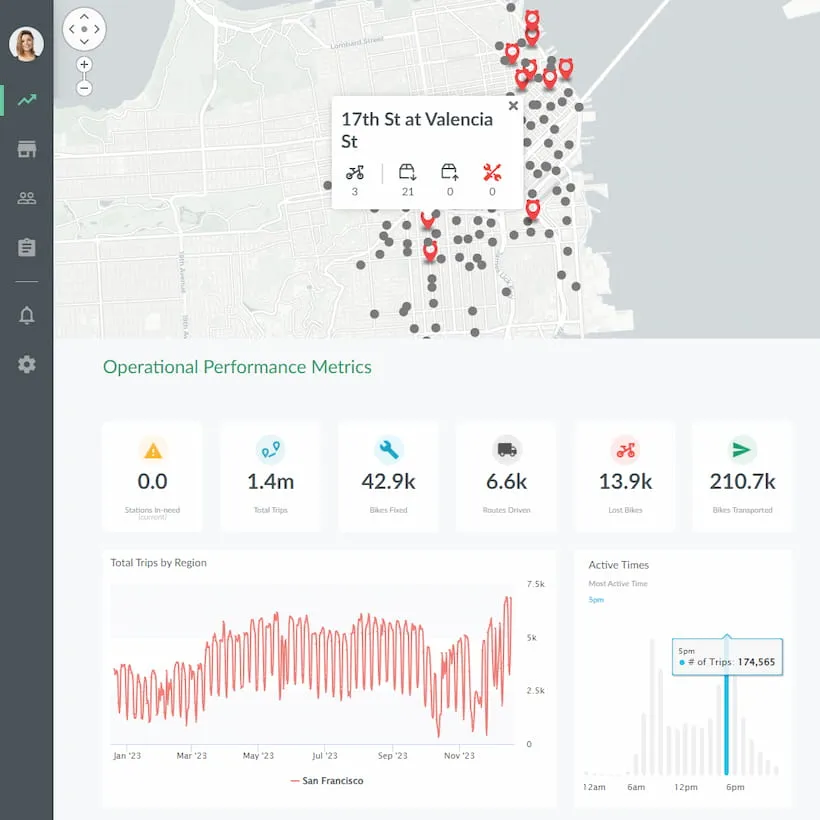
Interactive demo: Bikeshare Embedded BI, supported by Jaspersoft
Experience how to turn data into valuable insights that you and your customers can use to make better decisions.
